We get calls every week from retailers and hotel buyers who are placing their first handloom order. Most of them have been buying power loom textiles for years and know exactly what to ask for — GSM, thread count, fibre blend. But handloom is a different world, and the metrics that matter for machine-made fabric don't always translate directly.
So we thought we'd put together a proper guide. Not a marketing brochure — just the stuff we wish someone had told us when we started out in this business.
Forget thread count for a moment
Let's start with the thing that trips up most first-time handloom buyers. In power loom textiles, thread count is king. A 300 TC bed sheet is better than a 200 TC one, right? That logic makes sense when you're dealing with machine-woven fabric where everything else is standardised.
Handloom doesn't work quite the same way. Because the weaver controls the tension, beat, and speed manually, you can have a 180 TC handloom sheet that feels softer and more luxurious than a 300 TC power loom one. The magic is in the irregularity — each pass of the shuttle creates microscopic variations that make the fabric more breathable and more comfortable against the skin.
That doesn't mean you should ignore thread count entirely. It still tells you something about density and durability. But don't use it as the only yardstick. If you're comparing two handloom options, ask for a swatch instead. Touch them. Feel the weight. That'll tell you more than any number on a spec sheet.
What actually determines quality
The yarn
This is where it all starts. The quality of a handloom product is 60% yarn and 40% weaving. If the yarn is poor, even the best weaver can't save the final product.
For bed sheets and curtains, you want long-staple cotton — typically 30s or 40s count yarn. The higher the count, the finer the yarn, and the softer the fabric. For heavier products like sofa covers or blankets, coarser yarn (10s to 20s count) gives you the weight and durability you need.
One thing to watch out for: some suppliers mix in recycled or blended yarn to bring costs down. There's nothing inherently wrong with blended yarn, but you should know what you're getting. Always ask for the yarn composition. At Naralivin, we use 100% virgin cotton unless the client specifically requests a blend.
The weave structure
This is probably the most underappreciated factor. The weave type affects how the fabric drapes, how it washes, and how long it lasts. The three most common weave structures in handloom home textiles are:
- Plain weave — The simplest and most durable. Great for bed sheets and light curtains. Washes well, holds colour, and is easy to iron.
- Twill weave — Produces a diagonal pattern and a softer hand feel. Good for blankets and heavier throws. Slightly less durable than plain weave but more luxurious.
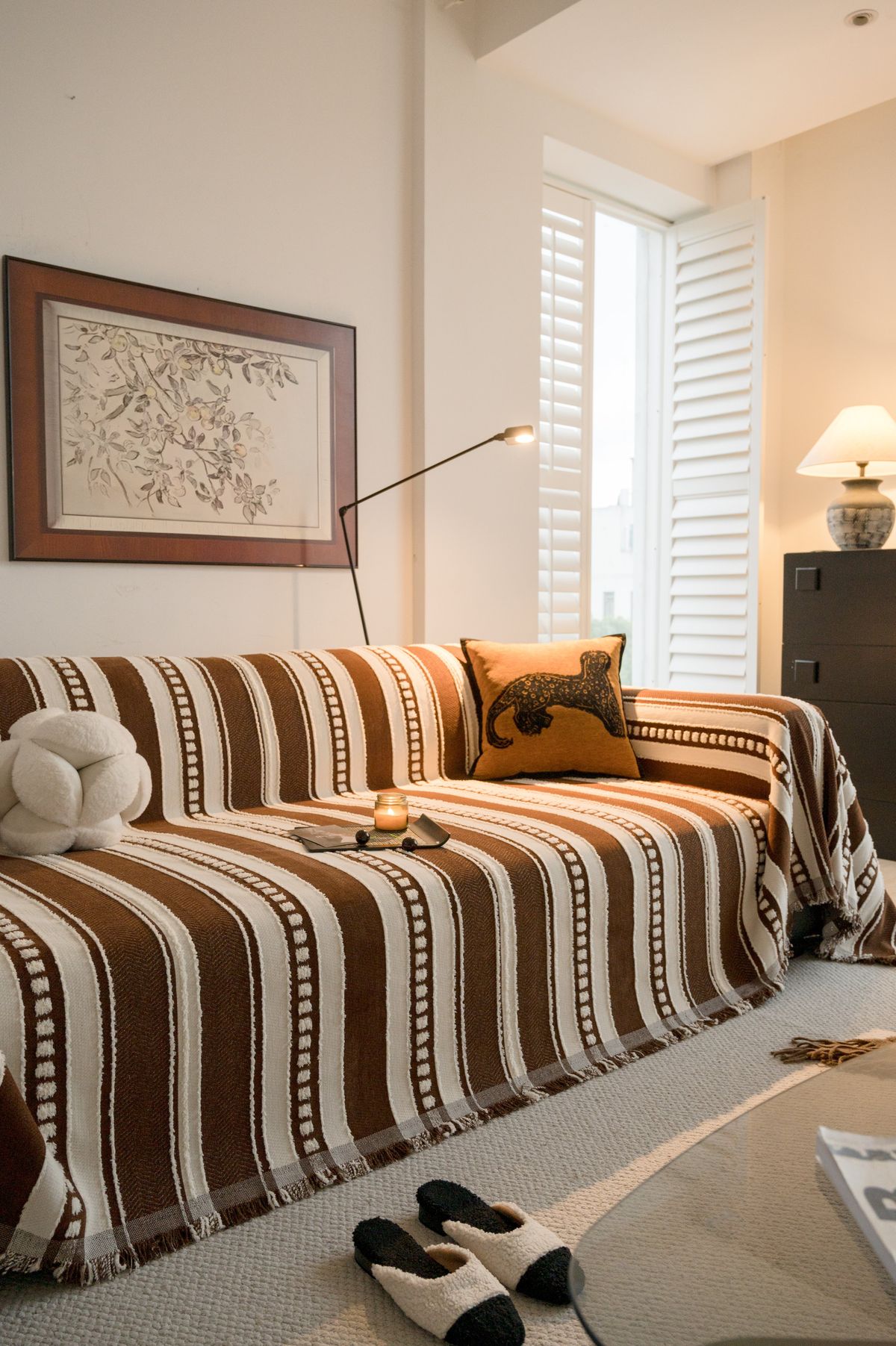
- Dobby weave — Creates small geometric patterns within the fabric. Adds visual interest without printing. Works well for cushion covers and decorative sofa covers.
For bulk orders, we usually recommend plain weave for anything that needs to survive frequent washing (hotel sheets, healthcare textiles) and twill or dobby for retail products where aesthetics matter more.
The finishing
Raw handloom fabric off the loom is surprisingly stiff. It needs finishing — which includes washing, softening, and sometimes calendering (pressing) — to become the soft product your customers expect.
Good finishing is what separates a decent handloom product from a great one. It's also where a lot of corners get cut. Ask your supplier what their finishing process looks like. If they can't answer clearly, that's a red flag.
Sizing and shrinkage — the B2B headache
Here's something that catches a lot of bulk buyers off guard: handloom fabric shrinks more than power loom fabric. Typically 4-6% after the first wash, compared to 2-3% for power loom.
This matters a lot when you're ordering to specific dimensions — say, king-size bed sheets for a hotel. If your supplier isn't accounting for post-wash shrinkage in their cutting, your 108" x 108" sheet is going to end up as a 102" x 102" sheet after the first laundry cycle.
We build in a shrinkage buffer on all our products. But not every supplier does, so always ask. And if you're ordering for the first time, get a sample, wash it, measure it, and then confirm your order. It'll save you a lot of headaches.
Colour fastness
If you're ordering printed or dyed handloom textiles, colour fastness should be near the top of your checklist. The dyeing process for handloom is different from power loom — it's often done before weaving (yarn-dyed) rather than after (piece-dyed), which generally gives better colour retention.
But "generally" isn't "always." Ask your supplier for colour fastness test reports, particularly for wash fastness (how well colour holds up in the laundry) and light fastness (how well it resists fading from sunlight). For hotel and healthcare clients, we aim for Grade 4-5 on the grey scale for wash fastness, which means negligible colour change even after dozens of washes.
MOQs and lead times — setting realistic expectations
Handloom production is inherently slower than power loom. A single weaver can produce maybe 8-10 metres of fabric per day, compared to a power loom machine that cranks out hundreds. This means lead times are longer and minimum order quantities need to be realistic.
For most of our products, we work with MOQs starting around 200 pieces. Lead time is typically 3-4 weeks for standard designs, or 5-6 weeks for custom orders. If someone promises you handloom products with a 1-week turnaround, be sceptical — they might be passing off power loom as handloom, which unfortunately does happen in this industry.
The single best thing you can do as a buyer is to start with a sample order. Touch the fabric, wash it, live with it for a week. The right supplier will be happy to send you samples — the wrong one will try to rush you into a large order.
A quick checklist before you order
- Ask for the yarn composition and count
- Request a swatch — don't order blind from a catalogue
- Confirm the weave structure matches your use case
- Ask about shrinkage allowance in cutting
- Request colour fastness reports for dyed/printed products
- Understand the MOQ and realistic lead time
- Ask about the finishing process
- Start with a small trial order before committing to bulk
There's no shortcut to finding the right handloom supplier. But knowing what questions to ask puts you miles ahead of most buyers. And once you've found a supplier you trust, the relationship tends to be a long one — handloom is the kind of business where partnerships matter more than transactions.